


Table of Contents
Introduction
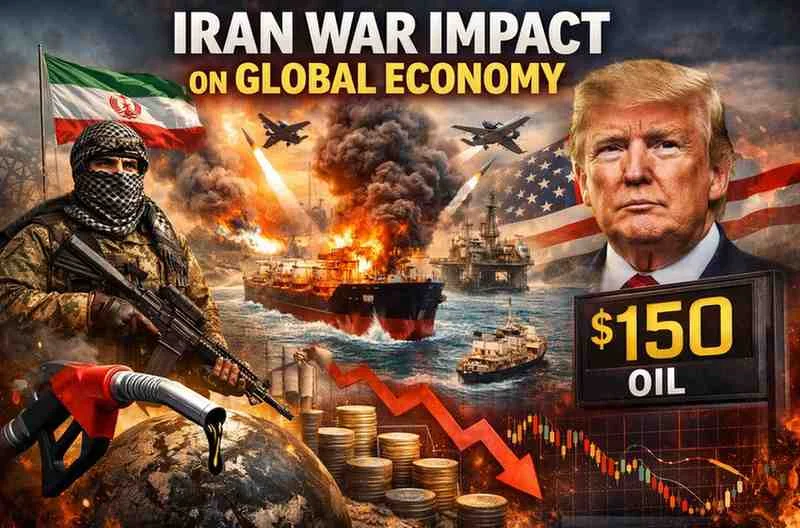
In 2026, the world is witnessing rising geopolitical tensions, especially the ongoing conflict between Israel and Iran. While wars are often seen as regional issues, their impact goes far beyond borders. One of the biggest concerns today is how war impacts the global economy in 2026.
From rising fuel prices to stock market volatility and inflation, the economic consequences of war affect businesses, governments, and everyday consumers worldwide. In this blog, we will explore the key ways in which war is shaping the global economy in 2026.
1. Rising Oil Prices and Energy Crisis
One of the most immediate effects of war is on oil prices. The Middle East is a major oil-producing region, and conflicts here can disrupt global supply.
When war escalates:
- Oil production may decrease
- Supply routes become risky
- Transportation costs increase
👉 This leads to a sharp rise in crude oil prices, which directly impacts petrol and diesel rates across the world.
Countries like India, which rely heavily on oil imports, are especially vulnerable to these price changes.
2. Inflation and Cost of Living
A key factor in understanding how war impacts the global economy in 2026 is inflation.
As fuel prices rise:
- Transportation costs increase
- Food and essential goods become more expensive
- Businesses raise prices to cover higher costs
👉 Result: The overall cost of living increases, putting pressure on households.
3. Stock Market Volatility
War creates uncertainty, and financial markets do not respond well to uncertainty.
During conflicts:
- Investors panic and sell stocks
- Stock markets become highly volatile
- Safe-haven assets like gold gain value
👉 This affects global markets and can reduce investor confidence.
4. Disruption in Global Trade
War impacts international trade by disrupting supply chains.
- Shipping routes become unsafe
- Delays in delivery increase
- Trade costs rise due to insurance and security risks
A major concern in 2026 is the safety of key oil transport routes, which play a critical role in global trade.
🏭 5. Impact on Businesses and Industries
Businesses across industries are affected by war:
- Manufacturing costs increase due to expensive raw materials
- Airlines face higher fuel costs
- Logistics companies deal with delays and rising expenses
👉 Small businesses are particularly vulnerable, as they have limited capacity to absorb rising costs.
6. Impact on Emerging Economies
Emerging economies like India are more sensitive to global disruptions.
- Currency value may weaken
- Import costs increase
- Economic growth may slow down
👉 This makes it harder for developing countries to maintain stability during global conflicts.
7. Government Spending and Fiscal Pressure
During war or global tensions:
- Governments may increase defense spending
- Subsidies may be introduced to control fuel prices
- Public spending increases
👉 This can lead to higher fiscal deficits and long-term economic challenges.
8. Impact on Global Supply Chains
Modern economies depend on interconnected supply chains. War disrupts this system:
- Shortage of goods
- Delayed production
- Increased costs for companies
👉 This was already seen during the pandemic, and war adds another layer of disruption.
9. Uncertainty and Economic Slowdown
One of the biggest impacts of war is uncertainty.
- Businesses delay investments
- Consumers reduce spending
- Economic growth slows down
👉 Prolonged conflicts can even lead to global recession risks.
10. Long-Term Global Impact
The long-term effects of how war impacts the global economy in 2026 include:
- Shift in global trade alliances
- Changes in energy policies
- Increased focus on alternative energy sources
Countries may also try to reduce dependence on conflict-prone regions for resources.
Conclusion
Understanding how war impacts the global economy in 2026 is essential in today’s interconnected world. The ongoing tensions between Israel and Iran highlight how regional conflicts can create global economic challenges.
From rising fuel prices and inflation to disrupted trade and market volatility, the effects are widespread and significant.
👉 Final takeaway:
War doesn’t just affect nations involved—it reshapes the global economy, influencing prices, markets, and everyday life across the world.